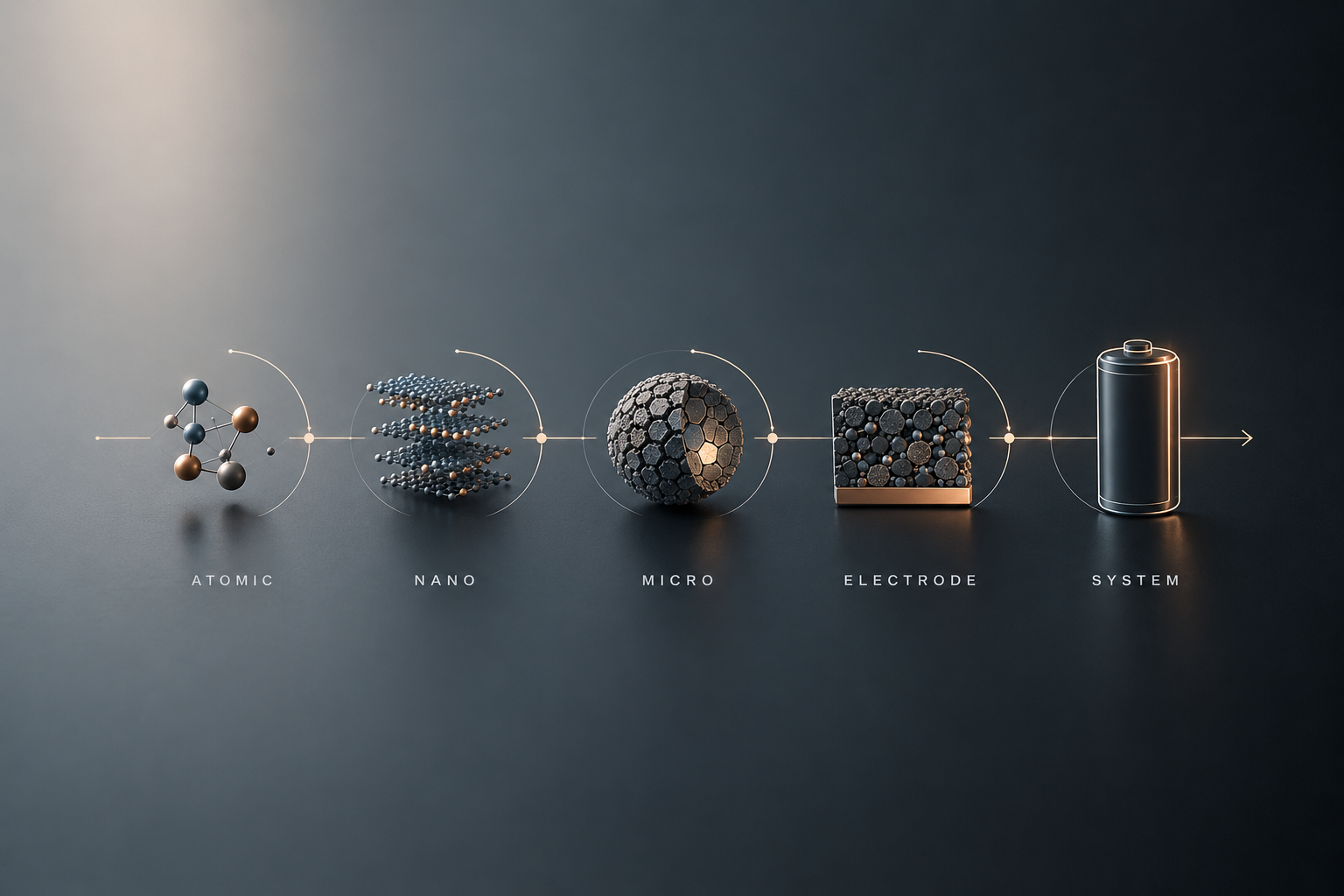
About the Laboratory
The Eum Research Group explores fundamental reaction chemistry and materials processing for next-generation energy-storage technologies. We seek new ways to control how energy materials react, form, and are manufactured.
Our research spans anion redox chemistry, energy-efficient materials synthesis, critical mineral recovery, and imaging-guided manufacturing. Across these areas, we combine solid-state chemistry with advanced characterization and imaging to connect fundamental mechanisms with practical processing.
By bridging chemistry across multiple length scales, we aim to establish scalable and sustainable approaches to materials design and manufacturing.


Reaction Chemistry
We explore anion redox as a new reaction space beyond conventional transition-metal chemistry. By activating oxygen and other chalcogens as redox centers, we investigate how local bonding and electronic structure enable high-valent states and reversible electrochemical reactions.
Our goal is to establish new reaction chemistries that transcend conventional redox limits and open pathways toward next-generation high-energy electrode materials.
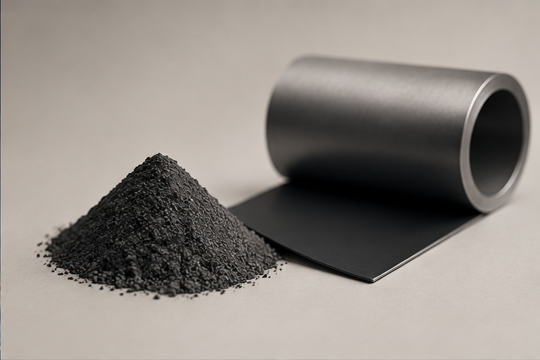
Materials Synthesis
Conventional battery materials rely on energy-intensive, high-temperature synthesis. We seek scalable processing strategies that reduce energy consumption while enabling precise control over phase, composition, and microstructure.
Our research focuses on liquid-mediated phenomena in solid-state synthesis and low-temperature synthesis routes toward energy-efficient materials production.

Circular Materials
We explore new pathways to secure critical minerals from both natural resources and end-of-life materials. We investigate how reaction chemistry and selective separation can enable efficient extraction and recovery of valuable elements.
Our goal is to establish scalable processes that transform diverse mineral resources and waste streams into sustainable feedstocks for battery manufacturing.

Imaging-Guided Manufacturing
We combine multiscale and multimodal characterization with materials processing to reveal how manufacturing conditions govern product quality and consistency.
These insights provide a foundation for imaging-guided, data-driven manufacturing platforms that connect microscopic architecture with macroscopic processing and performance.